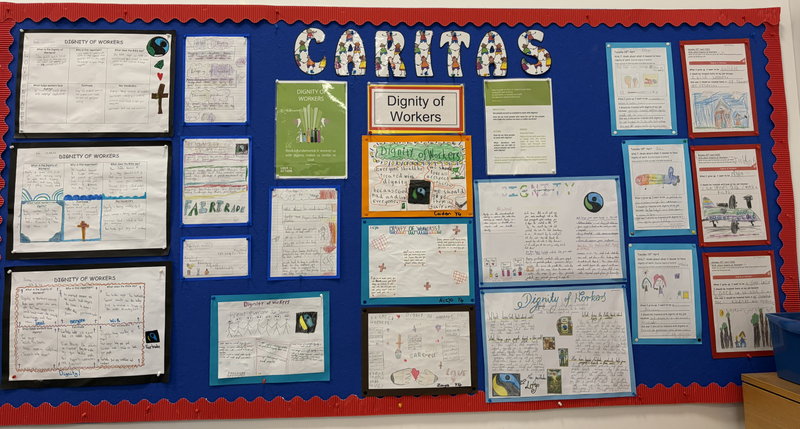

Catholic Social Teaching is at the heart of our school life and mission. It calls us to live out our faith through action, placing love, justice and the dignity of every person at the centre of all we do. Through the Rooted in Love programme, developed by Caritas Westminster, we explore six key principles that guide how we respond to the needs of others and the world around us.
At our school, we use Caritas Westminster's Rooted in Love programme to help children understand and live out the principles of Catholic Social Teaching. Through lessons, assemblies, prayer, charitable activities and community projects, pupils learn that they are called to follow the example of Jesus by showing love, compassion and respect for others.
The Rooted in Love programme is built around six key themes which help children understand how they can make a positive difference in their local community and the wider world.
 Human Dignity
We believe that every person is created in the image and likeness of God and therefore has inherent dignity and worth. This principle underpins all others, reminding us that everyone deserves respect, compassion and fairness. In our school, we promote inclusion, kindness and respect for all, ensuring that every child feels valued and supported. Children learn that every person is made in the image and likeness of God and therefore has inherent worth and dignity. They are encouraged to treat everyone with kindness, respect and compassion.
 Dignity of Workers
We recognise that work is a participation in God’s creation and should allow individuals to use their gifts and talents. All workers deserve to be treated with fairness, respect and justice, with their rights protected. We help pupils to understand the importance of effort, responsibility and respect for the contributions of others in society. Pupils learn that all work has value and that workers should be treated fairly and with respect. They explore how people use their gifts and talents to contribute to society and serve others.
 Community and Participation
We are called to live as part of a community where everyone has a voice and a role to play. This principle encourages active participation in school, parish and wider society. We provide opportunities for pupils to take responsibility, contribute to school life and understand that their actions can have a positive impact on others. Children learn that they are part of many communities, including their family, school, parish and wider society. They are encouraged to participate actively and responsibly, recognising that everyone has a role to play in building strong and caring communities.
 Solidarity and Peace
We are one human family, regardless of differences in culture, background or beliefs. Solidarity calls us to stand alongside others, especially those who are suffering, and to work towards peace and justice. In our school, we encourage empathy, reconciliation and a commitment to building positive relationships. Pupils learn that we are all members of one human family. They explore the importance of peace, justice, cooperation and standing alongside those who may be experiencing difficulties or injustice.
 Preferential Option for the Poor
This principle calls us to place the needs of the most vulnerable at the forefront of our actions. We are challenged not only to support those experiencing poverty, but also to recognise and respond to injustice. Through charitable work and reflection, pupils learn the importance of compassion, generosity and advocacy. Pupils learn that Jesus showed particular concern for those who were poor, vulnerable or marginalised. They are encouraged to recognise the needs of others and respond with generosity, compassion and practical support.
 Care for Creation
We believe that the Earth is a gift from God and that we are called to be responsible stewards of it. This principle encourages respect for the environment and an awareness of how our actions affect others around the world. We promote sustainability and care for our common home through both learning and action. Children learn that the Earth is God's gift to us and that we have a responsibility to care for it. They are encouraged to become good stewards of creation through environmental awareness and practical action.
Through these principles, Catholic Social Teaching shapes our curriculum, our relationships and our wider school community. It helps us to form pupils who are compassionate, thoughtful and committed to living out their faith through action - truly being rooted in love. Through our use of the Rooted in Love programme, children develop a deeper understanding of their faith and how it can be lived out in everyday life. By taking part in fundraising, community outreach, environmental initiatives, prayer and acts of service, they learn that even small actions can help create a more just, peaceful and loving world.